Author Archive

The futureNYCSubway: the vanshnookenraggen plan

Sunday, September 19th, 2010

The Map

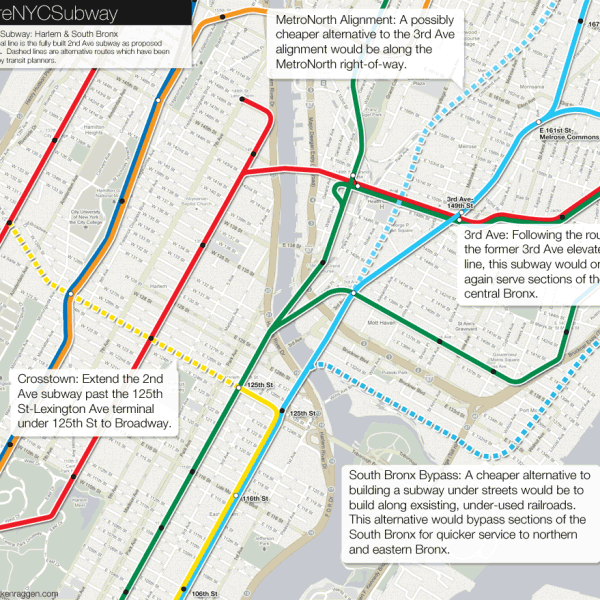
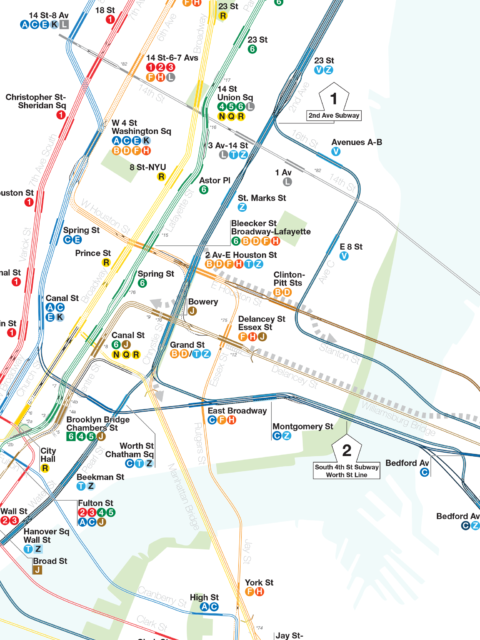
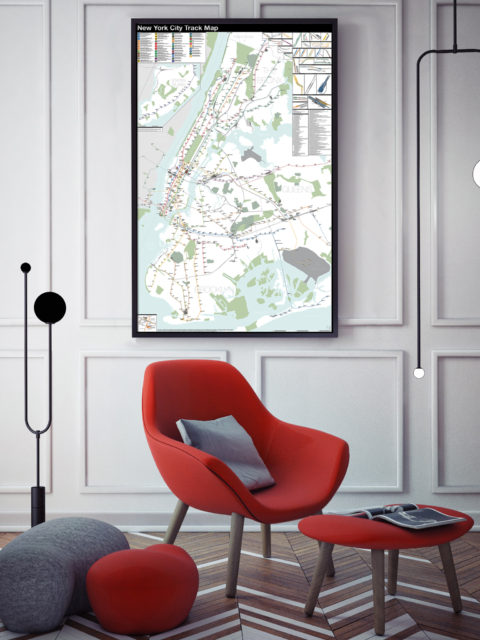
In the drop down menu at the top of this site there is a new link for the futureNYCSubway series. When you click on it you will be brought to a giant map of New York City with the current subway and proposed extensions. Everything which is on that map I’ve explained in previous posts and I hope to soon ad a feature where you can click on the map to visit a description of the line I propose.

An Explanation

I started doing research for this series about 5 years ago after completing my futureMBTA project. I made a few maps but I soon realized just how ambitious it would be to come up with a plan since New York’s subway system is so impressive and has such a byzantine history.

Many people, when I’ve shown them my ideas, usually express similar feelings: this is great but this will never happen. I don’t make plans with the idea that this is something that will happen, more that these are ideas that could, maybe even should happen, but ultimately these are ideas to inspire others of what might actually be possible. Of course there are so many factors which contribute to a project of this size, one look at the history of the Second Ave Subway tells the tale perfectly.

Too many people see these plans in the present context of the way things work in New York (city and state) and how the MTA runs the system. The MTA is a man made structure and is imperfect. This should not dissuade others from trying to push for something better. If subway expansion can not happen in the current political climate then how do we create a climate in which such expansion could be feasible?

Another perceived issue which comes up to thwart expansion is the seemingly immovable object known as the NIMBY (Not In My Back Yard). While it is true that much of the current system was built when the city was still farmland, this doesn’t mean that it is now impossible to build a subway. New highways in cities are much more disruptive than a subway or even a light rail line. While no one can deny that construction is a nuisance, it is a small inconvenience in the big picture (and these inconveniences can be mitigated with diligent public outreach).

My modus operendi for all subway expansion plans I have laid out in this plan is real estate development. Remember, while the subways were built to address crowding on the former elevated and streetcar lines in the city, the main goal was to open up new areas of the city for development. Much of the land which was opened up was owned by the very companies which were building the lines as a way of making once cheap, undesirable land closer to the city (commuting time), thus increasing the land’s value. The problem today is that there are no longer vast tracts of farm land open for development inside the reach of subways.

But, while we can no longer keep going out, we can keep going up. In the last decade New York City has seen an increase in population such that the city now has a higher population than ever before; this is something no other post-industrial city which saw massive population drain after World War II can say. Planners expect an increase in population of a million people in the next 20 years. Even with this current economic slump these numbers seem plausible. While the mayor has spent millions on making the city more livable, he has only laid a small foundation when it comes to preparing the city’s transportation infrastructure for 1 million new residents.

This isn’t to say Mayor Bloomberg hasn’t done anything, in fact he has one of the most impressive records in terms of transportation improvements in generations. The Second Ave Subway, the 7 Line Extension, the East Side Access project, and the new Hudson River rail tunnel are quite a staggering list of projects to start in 8 years and he is to be commended. But a closer look at these projects reveals a lack of foresight in these projects which may leave the transportation infrastructure bottlenecked in the not too distant future.

The 7 Line Extension does not contain space for a station at 41st St and 10th Ave, an area of the city which has seen extreme gentrification and massive new residential towers grow in the last decade. The Second Ave Subway is not being built with space for an express track system which, if it is ever fully built out, will leave the East Side of Manhattan (and presumably parts of the South Bronx) with less than adequate coverage (to compensate for the all-local subway planners have spaced stations further apart, creating a lose-lose situation for people living on the east side of Manhattan.)

What impressed me when I first read about the IND Second System (even the first system, too) was how ambitious and far-sighted it was. Money wasn’t as much of a factor in the design because it was more important to serve as much of the city as possible (which isn’t to say money was no factor at all; in fact the stark modernist stations with little decoration was the city’s way of cutting cost). Today subway plans are continually cut back or castrated due to cost to the point where they can cause overcrowding problems on trains or, conversely, stunt growth in areas where stations were cut for budgetary reasons. The Second Ave Subway is a perfect example of this lack of foresight.

Many words have been written over the last decade about the lack of ambitious, large scale transportation plans. We look to the other side of the world and see how China is building whole subway and train systems from scratch in the time it takes for out paperwork to get through the labyrinth of our bureaucracy. This, or course, is due mostly to the fact that after World War II cities let the bulldozers loose for one large, often Federally funded, project after another in the name of progress. These projects, housing projects, highways, and everything else under the banner of Urban Renewal, shocked the populous who rightfully fought back. But now we see that swinging the pendulum to the other side, away from centralized large scale developments, can create a quagmire in which nothing can get done, even projects with widespread support. The irony is that many of the protesters who fought against Robert Moses and the highway builders wanted more mass transit, but the outcome of this fight was that the very powers which were needed to build more mass transit have been retarded.

Unfortunately I am not here to try and fix these problems. In fact I don’t think I should, as an individual, try. The political system we have is by nature a bottom-up one (as opposed to China’s top-down). I truly feel that the bottom up approach is, ultimately, the better one. The problem is that it takes a long time for change to occur as it takes a long time for a seed to grow into a tree. Changing society to the point where large mass transit projects like the ones I’ve looked at throughout this series are possible will take a generation or two. That may even be a good thing since by then the growth and traffic (as well as other unforeseen problems) will probably reach a tipping point where new subway expansion becomes the only option. The worry is that by that time we don’t know if the power and resources will be available to save us.

I write that last bit with slight trepidation since it is important to keep in mind that every time a new transit project is proposed it’s proponents point to the terrible problems that will occur if the project is not built. All projects are cast in this light, it seems, so I don’t want this series to come off as some sort of high-minded cure for some future dystopia. Many, if not most, of the projects outlined here will never see the light of day and some probably shouldn’t. The city is ever changing and a project which looks great today might not be as beneficial in 25 years.

One last thing I need to address is that throughout this series I haven’t brought up the numbers; what will these expansion plans actually cost? I’m not an engineer and I haven’t the foggiest idea what the raw numbers would be. Much of the cost overruns from projects like the Second Ave Subway or Boston’s Big Dig came from relocating existing utilities, many of which were not on existing maps. Another major factor is that because these projects take so long to complete the cost of materials will fluctuate during construction. Inflation is another major factor, but one which needs to be taken into consideration especially when comparing a new project to a subway which was built 60 years ago. When factoring in inflation the billions it would cost to build the Second Ave Subway are not far off from original estimates from long ago.

Since I’m also not an economist I am not going to try to devise a solution to the numbers problem. Like I said, the point of this series was not to devise a plan which would get built but rather try to create a plan which would inspire those in power, those with the technical knowledge, to find solutions to the problems of building such a system. In the past we seemed to have understood how to do great things but today we can hardly balance a budget and keep roads paved. The Vanshnookenraggen Plan for the Future of the New York City Subway is a vision of what is possible when we put petty politics aside and work for the greater good.

the vanshnookenraggen plan

I’ve explained in detail all the different plans in past posts so now I want to tie them together into a comprehensive plan. If you are unfamiliar with an extension plan you can link back to the post. I have numbered the different plans in order of which ones could/should be built first.

  1. The Second Ave Subway
    2nd Ave subway alternatives in lower Manhattan.

    2nd Ave subway alternatives in lower Manhattan.

    The most obvious place to start since it is currently under construction, the Second Ave Subway project is today, as it is designed, short sighted. The full subway needs to be built with an express track with connections to the Manhattan and Williamsburg Bridges; a 2 track subway under Water St to connect with the IND Fulton St subway in downtown Brooklyn, a connection with the IND Queens Blvd Line, and three branches in the Bronx with a third express track.

    The Second Ave Subway is the most important expansion project the city could undertake. The subway is needed to relieve not only the IRT Lexington Ave Line but also relieve pressure from Queens and downtown Brooklyn. Connections to Brooklyn would allow existing trains to be diverted to Second Ave while allowing BMT Broadway and IND 6th Ave trains to run with more frequency.

    As part of the Second Ave Subway the IND Fulton St Subway in southern Queens should be extended as a 4 track subway from Gates Ave under Linden Blvd to the border with Nassau County. A new connection to the Rockaways would be built and the existing elevated tracks through Ozone Park would be demolished.

    Another key part of the Second Ave Subway would be a new crosstown subway under 125th St as an extension of the Q Train (which in the current plan would terminate at 125th-Lexington Ave). A 125th Crosstown Line was proposed in passing by the former CEO of the MTA as a future extension. This extension, to Broadway on the west side, has just as much potential as the rest of the Second Ave project and should be seriously considered in future plans.

  2. Flushing Trunk Line
    Flushing Trunk Line through Queens Plaza and Sunnyside Yards.

    Flushing Trunk Line through Queens Plaza and Sunnyside Yards.

    The fastest growing section of New York City in the last 20 years has been northwester Queens: Astoria, Elmhurst, Corona, Jackson Heights, and Flushing. This area is home to dense immigrant neighborhoods which are more transit dependent than other groups in the city. The area has very good housing stock but is under served by just the IRT Flushing Line 7 train and the IND Queens Blvd Line which swings south after Jackson Heights.

    A new subway, built with 2 local tracks at first but with provisions for a second pair of express tracks, could be one of the best mass transit investments in the nation in terms of dollars per rider. After the IRT Lexington Ave Line the lines which converge at Long Island City are the most congested in the entire system and with the continued population growth in Queens it is projected that these lines will become only more congested.

    The Flushing Trunk Line should be built to provide future expansion into College Point and eastern Queens as well as a future connection to a new crosstown subway in Manhattan. As part of this project the existing IRT Flushing Line 7 Train should be extended east to Bayside, Queens.

  3. Bushwick Trunk Line
    Bushwick Trunk Line track map.

    Bushwick Trunk Line track map.

    It is difficult to recommend the Bushwick Trunk Line as just one entity since it is really six (6!) subways in one. In any other city a proposal of this size and scope would probably be all the city would ever need in terms of subways. Even cities in China which seemingly put up new subway systems overnight would see the Bushwick Trunk Line as a challenge. I’ll break it down into how I think the line should go about being built.

    • Phase 1

      A 6 track “shell” subway (a subway built so that new tracks can be added later) should be built from the Williamsburg Bridge under South 4 St to Union Ave to where there is an existing shell of a station. From here the 6 track “shell” subway would be built out to Myrtle Ave. For the time being only 4 tracks would be activated, a local and an express. The existing Broadway elevated tracks would be demolished from the bridge to Myrtle Ave. After Myrtle Ave the tracks would ascend to the surface and continue along the existing tracks along Myrtle Ave and Broadway.

    • Phase 2

      Extend 4 tracks from Myrtle Ave & Broadway under Myrtle Ave out to Fresh Pond Rd in Ridgewood. For the time being only 2 tracks would be used and the existing Myrtle Ave elevated tracks would be demolished (a connection to the Fresh Pond train yards would be constructed along the existing train tracks through Fresh Pond).

      Bushwick Trunk Line with alternative routings.

      Bushwick Trunk Line with alternative routings.

    • Phase 3

      Construct what is known as the Utica Ave Subway. Branching off the BMT Canarsie Line a 2 track subway under Bushwick Ave would connect with the lower level of the station at Myrtle Ave & Broadway. Past Myrtle Ave a 4 track subway would turn south along Reid Ave to Fulton St and then on to Eastern Parkway.

      After Eastern Parkway the subway would be extended south along Utica Ave to a point in Flatlands, Brooklyn (such as Flatbush Ave). At some point a new connection between Manhattan and Williamsburg would be needed to accommodate service along the Utica Ave Line. A subway under East Broadway or a branch off of the IND 6th Ave Line under East Houston St would travel under the East River to connect with the 6 track subway at South 4th St.

    • Phase 4

      Construct a branch off of the IND Crosstown Line (G Train) which would continue east along Lafayette St to Broadway where it would turn north to connect with the Myrtle Ave Subway. From Fresh Pond Rd the 4 track subway would be extended out to Queens Blvd in Kew Gardens, Queens and eventually further east along Union Turnpike. As traffic demands, the line would be extended further east to the border with Nassau County.

    • Phase 5

      Add a second tunnel under the East River and build out a 4 track subway under Bushwick Ave to Broadway Junction which would replace the existing Broadway elevated tracks.

  4. Crosstown Manhattan & Trans-Hudson Lines
    10th Ave Subway and Crosstown alternatives.

    10th Ave Subway and Crosstown alternatives.

    Currently the IRT Flushing Line (7 Train) is being extended west from Times Sq to 10th Ave and south to 34th St but like the Second Ave Subway project this extension is being built in a way which will hurt the city in the future. A station at 10th Ave was discarded due to budget cuts and is an example of the totally backwards (e.g. suburban) way that transit planners/city officials are thinking about this project. A new station is being built in an area where no development will get off the grown for years to come but a station was cut for an area with an existing commuter base and massive new developments already under construction or open.

    I am placing a new crosstown subway this low on the priority list because development on the Far West Side will take so long. A new subway under 50th St from 10th Ave to Long Island City will take pressure off of existing subways in Long Island City and bring commuters directly into the midtown Central Business District. A similar line was planned in the 1960s and 70s but budget problems killed the project. Eventually this line should be connected with the BMT 14th St-Canarsie Line to create a loop through the Far West Side, but this is dependent on new traffic from developments like the Hudson Yards which are years away.

    As for new subway lines crossing the Hudson River into New Jersey, these are complicated by jurisdictional problems. If these can be overcome them the best options for new trans-Hudson subway service would be along the George Washington Bridge and an extension of the IRT Flushing Line into Hoboken and Jersey City, NJ.

  5. Staten Island Subway
    Brooklyn connections to a subway to Staten Island

    Brooklyn connections to a subway to Staten Island

    While it would be faster to build a new line either under the harbor or through Bayone, NJ, it would ultimately be cheaper to build an extension of the BMT 4th Ave Line or of the IND Culver Line. A branch of the Culver Line was proposed in the IND Second System and would be the best option in terms of cost and capacity. The Culver Line has an unused express track which could be activated so that commuters could quickly travel from Staten Island to downtown Brooklyn and midtown Manhattan. A direct route from Staten Island to downtown Manhattan would bypass a potential employment destination in downtown Brooklyn (which today is most easily reached by car). A Culver Line extension would also allow for easy transfers to 8th Ave trains at Jay St and would allow the most flexibility in terms of routing.

    On Staten Island itself I would recommend building a new subway through the center of the northern side of the island. Some plans have called for converting the Staten Island Railroad to subway clearances but I feel like it (the SIRR) works fine as it is now and that a new subway, perhaps along Victory Blvd or Forest Ave. This, however, would not be needed for some time to come and a subway terminal around St. Georges Ferry Terminal would suffice until commuting patterns justify an extension.

    Besides a new subway, the North Shore of the Staten Island Railroad should be reactivated, either with existing rolling stock or with light rail.

  6. TriboroRX and Atlantic Ave Super-Express
    The Atlantic Ave Super-Express through Broadway Junction.

    The Atlantic Ave Super-Express through Broadway Junction.

    The Triboro Rx travels against established commuting patterns to the point where ridership would be so low that a better investment would be to build an at grade road along the line for buses and trucks. However, I have included a complete Triboro Rx in my final plans since at some time in the future such a line may be needed and so the right-of-way should be kept up since it is too invaluable as a transit corridor not to consider. Because the line cuts through so many different parts of the city it could, conceivably, be built in sections where traffic demands (such as a crosstown shuttle in the south Bronx).

    The Atlantic Ave Super-Express Line would be a better project since it runs along established commuting patters but it would also cut back LIRR capacity and run parallel existing subway service. The benefit to such a line would be for better expansion of subway service into Jamaica since existing lines would make such a commute painfully long. The Atlantic Ave Super-Express would also allow for the existing elevated tracks through eastern Brooklyn to be demolished and replaced with faster service, both local and express, into the city.


The futureNYCSubway

  1. Introduction
  2. IND Second System
  3. Post War Expansion
  4. The Second Ave Subway: History
  5. The Second Ave Subway: To The Bronx and the Nassau Line
  6. Brooklyn: Bushwick Trunk Line
  7. Manhattan: West Side and Hudson Crossings
  8. Queens: Flushing Trunk Line
  9. Staten Island: The Last Frontier
  10. TriboroRX and Atlantic Ave Super-Express
  11. Conclusion: the vanshnookenraggen plan

The futureNYCSubway: TriboroRX & Atlantic Ave Express

Wednesday, August 11th, 2010

Introduction

I realize that on most of the maps I’ve made for this series there are a couple new subway lines which I’ve not described. I probably should have put this section closer to the beginning, but no matter. These two proposals, the Triboro RX Line and the Atlantic Ave Super-Express Line both come from the Regional Plan Association, the major non-profit planning organization for the New York Metropolitan area. The RPA’s plans are famous for being influential despite not being legally binding. The first RPA plan from 1929 laid out proposals for a complete rethinking of the highways in and around the metropolitan area (which were only later implemented by Robert Moses decades later). Other RPA plans have called for the redevelopment of the New Jersey waterfront, something which has been underway for the last couple decades.

TriboroRX

Triboro RX Line through southern Brooklyn from Bay Ridge to Broadway Junction.

Triboro RX Line through southern Brooklyn from Bay Ridge to Broadway Junction.

The Triboro RX Line was proposed in the Third Regional Plan back in 1996. The idea is simple: there are many unused or under-used rail lines that cross through the outer boroughs which could be used to provide passenger rail service to undeserved areas of the city. What’s more, many of these lines link up, in a sort of rail network, so that with only marginal extra construction a new “loop” or “crosstown” subway/commuter rail line could be created. The line was called Triboro RX and began at the waterfront in Bay Ridge, Brooklyn. The Long Island Railroad Bay Ridge Line was once part of the rail system which brought city dwellers to Coney Island back in the late 19th and early 20th century. When many of these lines were converted to subways the Bay Ridge Line stopped carrying passengers and today only carries freight. The line makes a broad arc through southern Brooklyn from Bay Ridge to Broadway Junction, almost as if you drew it with a compass.

What makes this line so appealing is that it would connect to every subway in Brooklyn (except the Brooklyn-Queens Crosstown Line) and would act like a shuttle to bring passengers over to lines which might not connect even in downtown Brooklyn or Manhattan. The line would also bring subway access to areas of Flatlands, East Flatbush, and Canarsie which today are woefully under served.

Rendering of the Cross-Brooklyn Expressway

Rendering of the Cross-Brooklyn Expressway

An interesting side note is that this is not the first time that mass transit has been proposed for this corridor. Back in the 1960s Robert Moses wanted to use this right-of-way for a highway, the Cross-Brooklyn Expressway. To get public support for the plan the proposal called for a below grade highway with mass transit along side (see drawing at left). Above, to cover the highway, would have been a linear park system with large apartment buildings, dubbed the Linear City. While it was an interesting idea, in reality such a project would have destroyed neighborhoods, increased traffic, and dotted the landscape with offensive and inhuman towers. The park probably would have been thrown out in early plans because of cost overruns and most likely so would have the mass transit line. Because this corridor is still so important, the idea of a Cross Brooklyn Expressway is still being mulled around by transportation planners, in some cases combined with a cross harbor freight tunnel.

Triboro RX through Jackson Heights.

Triboro RX through Jackson Heights.

After the Triboro RX whips around southern Brooklyn it comes up through Broadway Junction. At this point the line would, if built as a subway, run along the same tracks as the BMT Canarsie L Line. The Canarsie Line at this point is elevated but runs along side the Bay Ridge Line which is sunk below grade (click here to see a picture I took of this spot). Plans as far back as the 1960s called for demolishing the elevated structure and rebuilding it in the railroad trench. If the Triboro RX was built then this would be part of the plan, with the current elevated stations replaced with new below grade stations. The trench at this point could be built over with a park and/or housing, much like the original Linear City plan at a much smaller scale.

After Broadway Junction the Triboro RX would continue along the Canarsie Line until it (the Canarsie Line) turns towards Bushwick, at which point the Triboro RX would head through Ridgewood and into Middle Villege, Maspeth, and into Jackson Heights. In Jackson Heights there are two options for where the line could run; The original RPA plan just has the line continuing along the existing railroad line up into Astoria but there is a little know abandoned subway tunnel and station at the Roosevelt Ave station which could be used to more conveniently connect the Triboro RX to the Queens Blvd Line (E,F,M,R trains) and Flushing Line (7 train). The additional station was built by the IND when the Queens Blvd Line was first constructed in the 1930s. The original concept was for a subway to the Rockaways to use the station, one service would connect to the Queens Blvd Line while one service would terminate at Roosevelt Ave. (For more information check out the Roosevelt Ave page at Joseph Brennan fantastic Abandoned Stations site.)

The Triboro RX would continue along through Astoria where it would travel up to 7 stories in the air along the Hell Gate Bridge. Stations at this point would need to be engineered into the viaduct which would add to the cost but would allow for spectacular views of the city (and of course, transfers to other subway lines). On Randalls Island there could also be a station, though it would likely have the lowest ridership in the system. The island is home to concerts, ball fields, and a psychiatric center and is well served by buses but a station would do more to open the island up to people who’ve probably never thought about going there.

TrXiboro RX through the south Bronx.

TrXiboro RX through the south Bronx.

The last section of the line enters the south Bronx through Port Morris and has two possible routes; The first, as proposed by the RPA, would utilize an abandoned freight rail tunnel which used to serve the port and warehouses. The tunnel runs under St. Mary’s Park and links up with the MetroNorth Harlem River Line at Melrose Ave. Here the Triboro RX would turn back south and head west under 161st St to Yankee Stadium. The RPA plan calls for the line to terminate at 161st/Yankee Stadium but I propose that the line link up with the IND Grand Concourse B/D Line and head into Manhattan, terminating at 145th St. This would make for fewer transfers and allow Manhattan better access to the outer boroughs (so, if a subway tunnel to Staten Island was to be constructed, this line would be the only subway route to travel through ever borough).

An alternative route would take the Triboro RX closer to Hunts Point before turning west under 163rd St. In my Second Ave Subway proposal I call for a 4 track subway under 163rd St to serve two Second Ave trains to Throgs Neck and Co-op City. If this tunnel was to be built then the Triboro RX line could share the trackage. After 3rd Ave it would continue to Yankee Stadium, thus creating a crosstown subway of sorts through the south Bronx.

Atlantic Ave Super-Express

Atlantic Ave Super-Express from Manhattan to Brooklyn.

Atlantic Ave Super-Express from Manhattan to Brooklyn.

The Atlantic Ave Super-Express comes from a 1999 RPA proposal. The MetroLink was the RPAs concept of an integrated Second Ave Subway system which would save on construction costs by utilizing existing infrastructure, much of which I covered in my Second Ave Subway proposals. A major element to the RPA proposal was the conversion of the Long Island Railroad Atlantic Branch which runs under Atlantic Ave from Jamaica to Flatbush Ave. The RPA proposed continuing the Second Ave Subway from lower Manhattan to Atlantic Ave where the subway would run express out to Jamaica with two branches, one to Jamaica Center and another to JFK Airport. Interestingly, the RPA also proposed that these two branches terminate, in Manhattan, at Grand Central Terminal via a short spur under 42nd St.

The most important, and most expensive, part of a Super-Express subway along Atlantic Ave would be the connection to Manhattan from Brooklyn. Over the last 10 years planners and politicians have tried to find a way to connect lower Manhattan with either the Long Island Railroad or just to JFK via a subway or extension of the AirTrain. The problem has been cost; any plausible plan would be in the billions. The most recent plans floated called for extending the LIRR into Manhattan via a tunnel with a new terminal in lower Manhattan. Because of the space required such a terminal would be prohibitively expensive. If, however, the LIRR along Atlantic Ave was to be converted to subway service then it could be cheaply connected to existing service via the Manhattan Bridge (into Chambers St) or via the Nassau St subway. Alternatively, if the Second Ave Subway was finished through Water St then this tunnel could then connect to Atlantic Ave (proposed for the MetroLink).

Map of planned but unbuilt BMT system with subway connections to the Brooklyn Bridge.

Map of planned but unbuilt BMT system with subway connections to the Brooklyn Bridge.

An even more radical idea would be to extend it over the Brooklyn Bridge where it would run from Chamber St, over the bridge and under Adams St to Atlantic Ave. Such a plan is not without precedent; trains ran over the bridge when it first opened and when the BMT was building their subways through lower Manhattan there was a very serious plan to build this exact connection. There was originally to be two large loops, one which ran from DeKalb St in Brooklyn, over the Manhattan Bridge to Chambers St and down through Nassau St, under the East River via the tunnel, and linking back up with DeKalb St back in Brooklyn. This loop was built. The second one, a much larger loop was not. This loop would have started out at Broadway Junction in East New York. Using the Broadway Elevated Line (J/M/Z trains), it would enter Manhattan via the Williamsburg Bridge where it would run to Chambers St via the Centre St Subway. After Chambers St it would make a sharp turn and head to Brooklyn via the Brooklyn Bridge. From here trains would make their way back to Broadway Junction via any number of the elevated lines which snaked through Bedford-Stuyvesant at the time (Myrtle Ave, Lexington Ave, or Fulton St Els). Today, however, it may seem impractical to have trains running on the Brooklyn Bridge, but in a future where gas is much more expensive it would make sense given how many more people trains can carry. (For more information and better diagrams showing this proposed connection check out the Chambers St page at Joseph Brennan fantastic Abandoned Stations site.)

On the Brooklyn side, the LIRR terminates at Flatbush Ave so a new tunnel would need to be cut from Flatbush to the East River. This would be the most expensive part (along with a new tunnel if such a plan was chosen) but one which is also not without precedent. When the LIRR was originally built it in fact ran all the way to ferries on the East River. A large ditch was cut through Brooklyn Heights but the soot and noise so disturbed the populous that the railroad was ordered to cap the trench, thus making it a tunnel (and some would argue the first subway in the world). But tunnel system was so primitive that riding through the tunnel with the soot and noise was unbearable for riders. Soon the tunnel was shut down and service cut back to an above ground terminal at Flatbush Ave. The tunnel fell into legend until it was rediscovered by Bob Diamond in 1980. Today you can even take tours of the tunnel (for more information check out the BHRA’s web site.) Of course if a subway was to be built today it would not be able to reuse such a tunnel.

The Atlantic Ave Super-Express through Broadway Junction.

The Atlantic Ave Super-Express through Broadway Junction.

After Flatbush Ave the Super-Express Line would run down Atlantic Ave, making the existing stop at Nostrand Ave, to Broadway Junction. Here there are two options, the first is that the line could continue along Atlantic Ave out to Jamaica with no extra stops along the way, or it could link up with my previously proposed Bushwick Trunk Line. The Bushwick Trunk Line would allow trains to loop back through Chambers St like the original BMT plan, this time is extra express tracks through both Bushwick and along Atlantic Ave. On the Atlantic Ave side there would be only two tracks along Atlantic Ave from downtown Brooklyn to Broadway Junction. At Broadway Junction the Bushwick Trunk Line would connect with the Super-Express to create a 4 track subway from Broadway Junction, along Atlantic Ave in East New York, out to Jamaica. There could be three or four different train services: an all local train from Jamaica to Chambers St via Bushwick, an express train from Jamaica to Chamber St via Bushwick, an express train from Jamaica to Chambers St via Atlantic Ave, and an express loop which would run through Bushwick to Chambers St and back along Atlantic Ave.

The Atlantic Ave Super-Express lines in Jamaica.

The Atlantic Ave Super-Express lines in Jamaica.

From Broadway Junction to Jamaica it may make sense to rebuild Atlantic Ave with 4 tracks and demolish the existing elevated structure which runs through Cypress Hills and Richmond Hill. The elevated line was supposedly built to allow for an express track but one was never added. Because of this, and due to the fact that this section of trackage is the oldest in the entire New York City Subway system, it may be a good investment to replace the elevated structure with a 4 track subway along Atlantic Ave. Though passengers would no longer have a subway so close to them, a relocation would get rid of the blight which the line brings and allow for a much quicker commute into the city. And while some people would have to walk further, moving the line south would bring subway service closer to others.

In Jamaica Center the Super-Express Line would use the Archer Ave Subway. The original plan for the Archer Ave Subway (which would have served another super-express subway through Queens) was to have two branches, one running east along the LIRR right-of-way to Queens Village, and one running southeast along the Far Rockaway branch through Laurelton and Rosedale (which would replace LIRR service with subway service). These two extensions should still be a high expansion priority regardless if the Super-Express Line is built. Due to the congestion along the LIRR it might not be feasible to use the LIRR right-of-way to Queens Village so a two track subway might be built along Hollis Ave. This would more evenly distribute subway service but would be much more expensive. Another possibility is that if the IND Fulton St Subway extension was to be built then the two subways (that and the Super-Express) could link up allowing Queens Blvd trains to reach further into southeastern Queens.

Conclusion

I left these two expansion ideas for last because, while they score points in terms of cost, they seem like scraps compared to major projects like the Second Ave Subway. A giant loop subway connecting all boroughs seems good on paper but in reality it might not have the ridership to justify the cost. A crosstown subway from Brooklyn to Queens was planned for decades before it was finally built as the G train and today the G is perhaps the most loathed line in the system; it runs very infrequently and runs only 6 or 4 car trains as opposed to the usual 10 cars. It basically acts as a glorified shuttle. If the G, which actually runs between large employment centers and through dense residential neighborhoods, can hardly work out, how is a massive system like the Triboro RX to work? But at the same time the Triboro RX would run through major areas of the city which are far from other subways and would connect to almost every other line in the system.

The Atlantic Ave Super-Express also looks good on paper but once again the benefit might not out weigh the cost. The city has been trying for the last decade to bring the LIRR into lower Manhattan (or some variation) but the cost has just been too great. Still, the existing Broadway El can only serve Brooklyn for so long before it becomes obsolete. Converting Atlantic Ave into a subway which would serve new areas of the city and connect to the existing system to save on cost may, sooner rather than later, become a high priority project.

Note: Unlike my previous posts I am not going to include another system map to show how these two projects would add to the system as a whole. In my next and final post I will explain how all the projects I discussed fit together with a giant system and geographical map.


The futureNYCSubway

  1. Introduction
  2. IND Second System
  3. Post War Expansion
  4. The Second Ave Subway: History
  5. The Second Ave Subway: To The Bronx and the Nassau Line
  6. Brooklyn: Bushwick Trunk Line
  7. Manhattan: West Side and Hudson Crossings
  8. Queens: Flushing Trunk Line
  9. Staten Island: The Last Frontier
  10. TriboroRX and Atlantic Ave Super-Express
  11. Conclusion: the vanshnookenraggen plan

The futureNYCSubway: Staten Island

Tuesday, July 13th, 2010

Introduction

Staten Island RR map, 1952 via Wikipedia

Staten Island RR map, 1952 via Wikipedia

Presently, Staten Island has only one passenger rail system, the Staten Island Railroad (SIR) , which runs from St George at the northeastern tip to Tottenville at the southwestern tip. Though it is often referred to as Staten Island Rapid Transit it is in fact a standard gauge railroad by FTA standards (but with third rail power). This means that subway trains would not be able to operate on the line, making it more of a commuter rail.

Like with Brooklyn, rapid transit on Staten Island traces it’s routes back to steam powered trains. Originally there were three branches, the North Shore branch, Main Line (the only surviving line), and the South Beach branch. The North Shore branch ran from Cranford, NJ to St George Terminal and parts are still used today as freight-only service serving the Howland Hook Marine Terminal at the northwestern point of Staten Island. The North Shore branch right-of-way still exists, parts have been turned into a walking path while others remain decaying with the remnants of stations still hanging above the streets. Politicians and planners are currently trying to reactivate the North Shore branch, either as heavy rail like the SIR or as a light rail system.

The South Beach branch split off from the Main Line after Bay St in the Clifton neighborhood and wound its way through Rosebank, Fort Wadsworth, Arrochar, and South Beach, terminating at Wentworth Avenue. Service was discontinued in 1953 and was literally wiped off the map, demapped and redeveloped as housing. Almost nothing remains of the South Beach branch other than a few ghostly markings (e.g. Railroad Ave).

A track schematic from NYCSubway.org showing what the full SIR looked like in 1949.

Like other outer boroughs, Staten Island developed slowly in the 19th and early 20th Century. Originally it served maritime industries, then moving on to light manufacturing and eventually heavy chemicals. The rocky terrain and sandy soil limited farming and many towns developed as seaside resort communities. It wasn’t until after World War II when suburban development began to take hold, in part aided by new automobile-only bridges which the Port Authority of NY and NJ were building. Subways from Brooklyn were planned as early as 1914 but shelved as too costly. The car became king. The Verrazano-Narrows Bridge had been originally planned as a tunnel but when Robert Moses took the project over he built what was at the time the longest suspension bridge in the world. He also criss-crossed the island with highways, though many he wanted to build were stopped.

Still to this day a subway to Staten Island seems like a long shot. The ride alone would be hours long at some points but it would be a one seat ride into Manhattan. The only ways off the island are via clogged bridges or the Staten Island Ferry (which is free). The two options for improved rapid transit on the island being seriously studied are a reactivated North Shore branch (which will not be cheap since the line has been essentially abandoned for 60 years) and connecting the Hudson-Bergen Light Rail system to Port Richmond, either over a new bridge (possibly a replacement for the Bayonne Bridge) or a tunnel under the Kill Van Kull.

Downtown Manhattan Connection

Downtown Manhattan connection to a subway to Staten Island

Downtown Manhattan connection to a subway to Staten Island

The first time I had ever heard of a plan to build a subway to Staten Island the thought which came to me was of a tunnel from downtown under the harbor. I realized that an underwater tunnel over 5 miles long was a ridiculous concept but one which seems to pop into most people’s minds when they also hear of a subway to Staten Island (and one which apparently had been proposed back in the 1950s). Though it would be the most direct route it would also be the most expensive. However, for sake of comparison, I’ll take a good look at a direct tunnel between downtown Manhattan and Staten Island. Also for sake of simplicity, in the map to the right, I have the tunnel connecting to a fully completed Second Ave Subway even though any of the other lines which run through downtown Manhattan could be used instead.

Like I mentioned before, the fastest and shortest way to connect Staten Island to Manhattan would be a tunnel under the harbor. Right away this would be thrown out as a possibility since the Staten Island Ferry makes the exact same trip at a fraction of the cost. One benefit to such a plan would be that Governors Island could be connected to Manhattan with a new station along the line. With new planned development which will occur over the next 20 years there will be an increased need for better transportation to the island. Like for Roosevelt Island it may make more financial sense to build a tram system, such as the one proposed by Santiago Calatrava.

A second alignment, one which would be much less expensive but politically difficult, would build a new tunnel under the Hudson River over to Liberty State Park in New Jersey where the subway would run at grade (thus reducing the cost) along side the existing Hudson-Bergen Light Rail line to Bayonne. New bridges over roads would need to be constructed as the light rail currently crosses the streets at-grade. What makes this tricky is that any transportation infrastructure crossing into New Jersey would be under the jurisdiction of the Port Authority of NY and NJ, making a connection with the MTA would add another layer of bureaucratic red tape. Both alignments would reach Staten Island at the St George ferry terminal. The current SIR is considered by the federal government to be standard rail rather than rapid transit. Because of this subway trains would be prohibited from running on the existing rail.

Via Brooklyn

Brooklyn connections to a subway to Staten Island

Brooklyn connections to a subway to Staten Island

The more realistic route for building a subway to Staten Island would be under the Narrows between Brooklyn and Staten Island. On the Brooklyn side there already exists the subway infrastructure to connect to so the tunnel wouldn’t have to be as long as if it went directly to downtown Manhattan. Supposedly, when the 4th Ave subway in Brooklyn was being built, a short tunnel was started from Bay Ridge to Staten Island but was never completed since there was no addition funding.

The first option would be to create a branch of the 4th Ave subway (N/R) after 59th St (Brooklyn) which would dive under the harbor and head straight to St George Terminal. This route would follow the path of the extinct 69th St Ferry from Bay Ridge to St George. The original IND Second System plans called for a subway under Bay Ridge Ave. It would be better to built the subway along the Long Island Railroad Bay Ridge branch both for cost and because in doing so it would allow for a 4 track tunnel to be built to allow for freight trains to travel under the harbor, a long standing plan known as the Cross-Harbor Tunnel which has never had the demand to justify the cost (this tunnel has been proposed by the Port Authority since its inception and is still being proposed by planners). Staten Island trains would run express up the 4th Ave line and could enter Manhattan via the Manhattan Bridge or via Whitehall St (tunnel).

An alternative would be to bring back the original IND Second System plan to build a new subway branching off of the Culver (6th Ave) Line at Ft Hamilton Parkway. The 4 track subway would have two branches, one which would serve Dyker Heights (local) and one which would run under the harbor (express) as discussed above. Unlike the 4th Ave alignment, a Ft Hamilton alignment would provide new service to parts of Brooklyn as well as provide express service to Staten Island.

The last alternative would be a variation of the Ft Hamilton subway where instead of the subway terminating in Dyker Heights it would run up on the Verrazano-Narrows Bridge (much like my proposal for a subway on the George Washington Bridge). This alignment would be cheaper than a tunnel as the bridge already exists, though it would have to be retro fitted to allow trains (which Robert Moses famously designed his roads without). This would take away road space from automobiles and cause many delays during construction.

Staten Island

Subways and other transit options in Staten Island

Subways and other transit options in Staten Island

The only “serious” plans I could find of a subway to Staten Island were from the 1939 IND Second System map showing a tunnel under the Narrows to Staten Island with two short branches hugging the coast of the island, one north to St George Terminal and Westervelt Ave, the other south to Grant Ave in Tompkinsville. Having not much to go on I would wonder if these short branches were designed so that one day the North Shore and Main Line branches of the SIR would be converted to subway use. It may be safe to assume this given the history of rapid transit companies and the city converting old railroads into subways.

  • North Shore Branch

    As I talked about above, the North Shore branch is being tossed around by politicians and planners for reactivation. The most popular ideas for the line would be to rebuild it as heavy rail so trains would use the same rolling stock as the existing SIR or to build it as light rail, which would be cheaper but would prohibit freight trains from using the line. Other ideas are for a bus-way or a commuter bike/walking path. Reactivation, it is hoped, would bring redevelopment to this sleepy corner of the island, something improved bus service would not do.

    While reactivating the North Shore branch seems simple enough, it still might face a higher price tag relative to projected ridership. For much of its route the branch hugs the coast, running parallel to Richmond Terrace. There is not much development along this route and it isn’t until you get out to Port Richmond and Mariner’s Harbor when the line runs through built up neighborhoods. The line also ends suddenly in Arlington, past which are rail yards, marshlands, and industrial zones. Because of this I would alter the planned path of the railway by swinging it south when it reaches the Bayonne Bridge to run along the median (or the side) of Route 440, the Dr. Martin Luther King Jr. Expressway, south through Willowbrook Park to a point where Richmond Ave meets Rockland Ave. This routing would serve many more people including parts of western Staten Island which have only developed in the last 50 years. The line might even be extended further south to the Staten Island Mall and the new Fresh Kills Park.

  • Hudson-Bergen Light Rail

    Another plan floating around is to extend the Hudson-Bergen Light Rail, which currently terminates at East 22nd St in Bayonne, into Staten Island. The Port Authority of NY and NJ is currently looking at ways of dealing with the Bayonne Bridge since new super-sized Post-Panamax container ships have trouble clearing the bridge (dredging only can go so far.) One option is to literally jack the bridge up, but replacements are also being studied. If a new bridge was constructed it could easily have a space for mass transit, a light rail extension or even for express buses (perhaps both). Though no serious plans have surfaced it would seem to be more prudent to keep any extension of the Hudson-Bergen Light Rail short, perhaps a single park-and-ride facility at the toll plaza on the Staten Island side.

  • Staten Island Expressway

    In keeping with the suburban nature of Staten Island it might make sense to build a subway, elevated or at grade, along the median of the Staten Island Expressway. This alignment would be a continuation of the aforementioned Ft Hamilton Parkway subway which would cross over the Verrazano-Narrows Bridge. Running closer to the geographic center of the island the line could be built with stations farther apart with large parking garages to attract drivers. A major downside would be that this line would not serve the St George Ferry Terminal, the largest transportation hub on the island.

  • North-Central Alignments

    When proposals for subways on Staten Island come up (now and then), one idea that usually floats to the surface is a subway along Victory Blvd. Victory is the major east-west road crossing the entire north side of the island. If the North Shore branch was reactivated then a subway along Victory Blvd would sit between the two branches of the SIR, serving the island in a nice, geographically proportional way. However, the population of the island is not distributed in such a simple way and Victory Blvd runs though some lightly settle areas (relatively speaking). A better alignment would be one slightly north along Forest Ave or Castleton Ave through West Brighton. These alignments would more directly serve developed areas and commercial strips. These north-central alignments would run west to Jewett Ave and turn south to meet up with Victory Blvd. If there is to ever be an actual subway on Staten Island (and voters like to say, “no”, there won’t) then these are the three most optimum places for one to run.

Conclusion

If I was to create a list of the many, many proposals I’ve discussed throughout this series, which would rank the actual likelihood of a subway being built, a Staten Island subway might be last on the list (excluding a reactivated North Shore Branch which might be at the top). However, no list of proposed subways throughout New York City would be complete with out mentioning Staten Island. The density required for such an expensive project does not exists, nor do the traffic patterns justify building a train line which would take as long as it would to make the journey to Manhattan (the ferry takes about 25-30 min, a train would take a good hour or more). But at the same time the island does need more connections to the world since it only has 4 bridges, most of which are outdated and clogged. A railroad tunnel to Staten Island, be it a subway or part of a Cross-Harbor Freight system, would give island residents another route off in case of emergencies (or another way for supplies to come in). It would also take pressure off New Jersey and Brooklyn highways with other commuting options other than by car. But the most interesting case for a subway to Staten Island is from the Peak Oil debate, that being what will happen when oil prices become so high that the suburban, autocentric lifestyle of the island becomes untenable. The only way off the island is by a machine that uses oil (car, truck, bus, ferry). A train to the rest of the country, now a rather pricey endeavor, might be the more affordable option not too far long down the road.

System Map

Subway diagram showing Staten Island subways.

Subway diagram showing Staten Island subways. Note: No file to download.


The futureNYCSubway

  1. Introduction
  2. IND Second System
  3. Post War Expansion
  4. The Second Ave Subway: History
  5. The Second Ave Subway: To The Bronx and the Nassau Line
  6. Brooklyn: Bushwick Trunk Line
  7. Manhattan: West Side and Hudson Crossings
  8. Queens: Flushing Trunk Line
  9. Staten Island: The Last Frontier
  10. TriboroRX and Atlantic Ave Super-Express
  11. Conclusion: the vanshnookenraggen plan

Inside the Hell Gate Bridge

Saturday, June 19th, 2010

The Hell Gate Bridge is one of the more impressive bridges in New York City. Completed in 1916 to allow through service by trains from New Jersey to New England, the 4 track arch bridge was the longest of its kind in the world when it opened. Supposedly, it was over engineered so that it looked trustworthy enough for people to believe it would stand. Because of this it is thought that this bridge, after humans are gone from the earth, would be the last New York City bridge to fall, lasting almost a thousand years.

Having spent much of my time in Astoria near the bridge I’ve always wondered what it would take to explore it. Unlike the High Line or other right-of-ways I’ve explored in the past this was very much active and very dangerous. We had to keep lights off as not to be spotted and had to keep a keen eye out for any on-coming trains. After a long mile and a half walk in the middle of the night we made our way up the tracks.

It is quite a beautiful sight to see the city from that height, about 7 or 8 stories above the ground. We reached the southern support tower, designed to emulate the great triumphal arches of Rome. Inside there was a small iron spiral staircase leading up to the top of the arch, inside the arch that is. The cavernous space was a sight to behold (no pictures were taken due to the complete lack of light). The structure has large slits in it which seems like a nod to arrowslits in medieval castles. Continuing up another set of spiral stairs leads to the roof. Inside the air was heavy and filled with particles, no doubt from the inches of decaying bird carcases and dirt which lined the floors.

The archways surrounding the roof of the support tower created an interesting effect in that you did not feel at all like you were in a dangerous place much like you do on the roofs of ordinary buildings. The archways created a room with windows out into the city. The weather was so nice that you hardly realized you were outside at all.

The city was only an idea at this point. The noise, the energy, the problems, all were a distant hum; all was quiet and peaceful. Trains passing below offered the only clue to the reality of the situation, but also brought out the adolescent fascination we had of big powerful machines.

We were there for a while, not to do damage but to experience something few ever have the chance to. It was a moment. What has always attracted me to urban exploration was the curiosity in knowing that what one sees in their daily life is only skin deep, that a thousand levels of infrastructure supports everything you take for granted in life. The bridge was there before I was and will be after I am no longer.

We would have stayed, the sunrise from this vantage point would have been indescribable, but legal reasons kept us wary. On our way down we happened to catch sight of a light further below in the tower. Climbing down further we discovered that the tower itself was hollow and inside were four great halls, 7 stories tall each.

While exploring each great hall we quickly ran the numbers as to the feasibility of throwing the worlds most exclusive party inside the base of the tower. Obviously David Byrne was in… A stairwell led down under the floor to a locked door, one which was familiar to me from my many walks around the outside of the bridge in the day. This was the easy way, the less fun way, the practical way in.

We made the climb back to track level and back along the tracks. The night was completed to full, breakfast awaited as a reward.

Music: Washed Out feat. Caroline Polachek

Tuesday, June 8th, 2010

Washed Out feat. Caroline Polachek

I haven’t written anything about music on here for almost a year. That mostly had to do with just not hearing much that really grabbed me in a while, until today when I was checking out the Adult Swim “8 Tracks, 8 Weeks” singles program. I’ve been really into, what’s been now termed as Chillwave or No-fi, for a while now. I’ve been digging bands like Neon Indian, Toro Y Moi, Wavves, and have fallen in love with Best Coast and Washed Out.

The droney lo-fi sounds of stoned surf rock (which is not the same as “surfer rock”) are perfect for this time of year. Listening to this song I feel like I’m on a beach at sunset, time frozen in a perfect warm moment, in love with a beautiful woman, in my arms, which will soon be reproduced for an add for jeans.

Also the graphic design for this singles program is pretty sweet, no?

This is Washed Out’s contribution to the Adult Swim Singles Program.

Washed Out feat. Caroline Polachek (of Chairlift)